Shqip
Shqip English
PRESS STATEMENT: The Draft Law on Gender Equality – a universal necessity for justice, dignity and a European future
- Oct 21, 2025
- crca-author
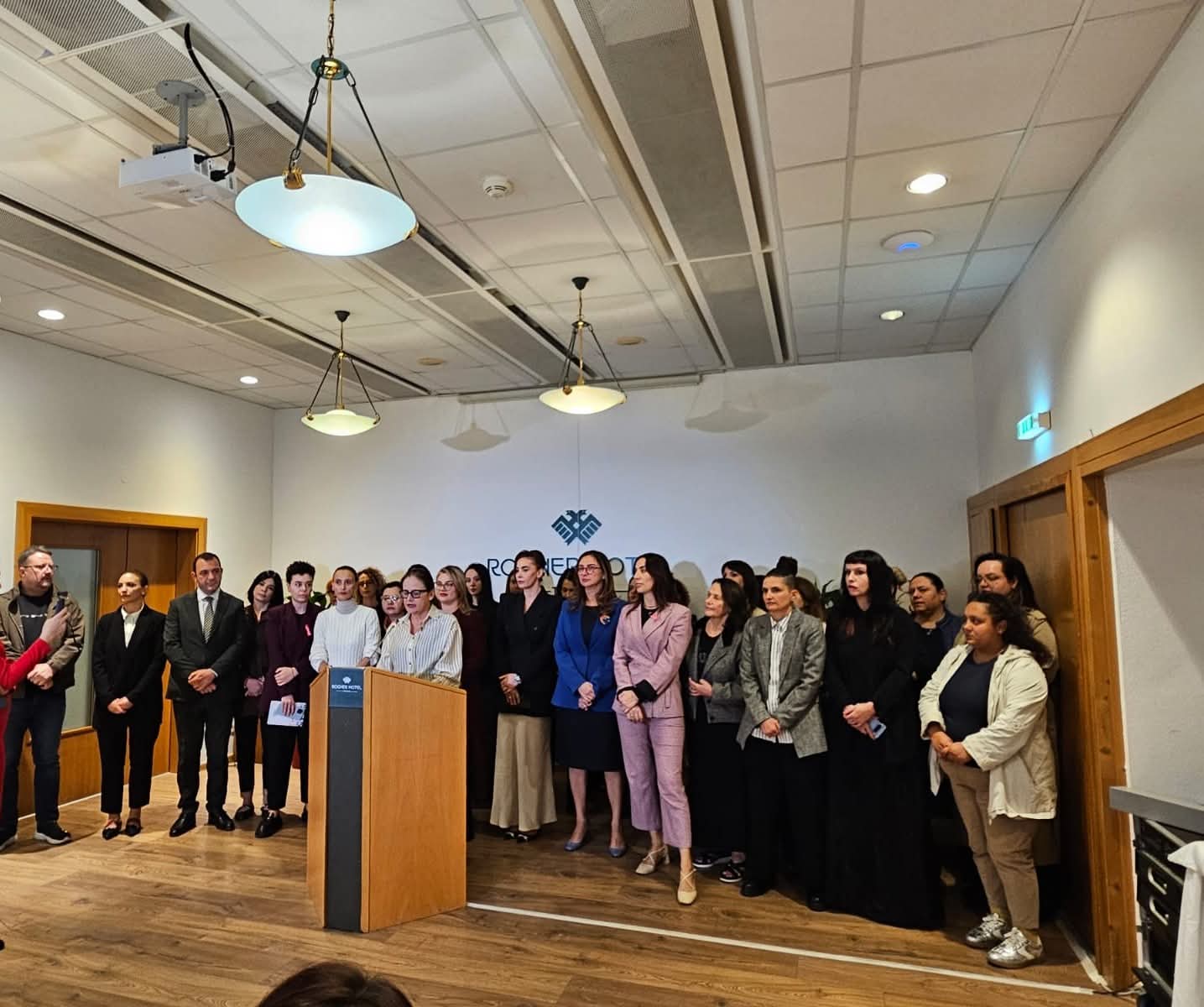
Tirana, 21 October 2025 – The new Draft Law “On Gender Equality”, submitted to the Parliament of Albania by the Ministry of Health and Social Protection, reaffirms Albania’s commitment to the universal, indivisible and inalienable rights of women and men, girls and boys. It introduces a profound legal reform aligned with the European and international human rights framework, which is essential for the country’s democratic and economic progress.
Nearly three decades after the Beijing Declaration and Platform for Action (1995) and the adoption of UN Security Council Resolution 1325, the world, including Albania, continues to face structural and systemic inequalities that limit human potential and weaken democratic principles. These inequalities have deep consequences for the lives, freedoms and dignity of millions of people and hinder sustainable development and social well-being.
Albania must remain firm in the conviction that the rights of women and girls are universal, indivisible and inalienable, and that gender equality is not an ideology but a fundamental human right and a prerequisite for just, peaceful and inclusive societies. The new Draft Law on Gender Equality updates the existing 2008 law, aligning it with the European Union acquis, the European Convention on Human Rights, the UN Convention on the Elimination of All Forms of Discrimination against Women (CEDAW), and the Istanbul Convention on preventing and combating violence against women and domestic violence.
This law is the result of a broad inter-institutional and public consultation process, involving central and local state institutions, civil society organisations and women’s networks, experts in human rights and gender equality, as well as representatives of international institutions, including the EU Delegation, UN agencies and other development partners.
The new law strengthens accountability mechanisms, makes gender-responsive budgeting and the collection of gender-disaggregated data mandatory, reinforces the competences of the National Council for Gender Equality, and introduces concrete instruments to achieve real equality in employment, decision-making and public life. It recognises and values unpaid care work, promotes equal pay for equal work, ensures equal participation in leadership and politics, and guarantees that public policies contribute to fair and sustainable development for all citizens.
In light of recent disinformation campaigns, it is important to clarify that the draft law does not introduce “new genders” and does not replace biology; it does not interfere in family life or change the concepts of “mother”, “father” or “parent”; and it does not undermine religion, sport or national identity. On the contrary, it strengthens the Albanian family, protects the dignity of every citizen and ensures mutual respect between women and men.
We, as human rights defenders, strongly oppose attempts to remove essential terminology from the Law on Gender Equality, including the terms “gender stereotype” and “multiple belonging”. These are not new or ideological concepts, but fundamental pillars that make the law effective and capable of addressing the real inequalities experienced daily in Albanian society. Eliminating the term “stereotype” would mean choosing not to address the root causes of inequality. Inequality does not begin in the law; it begins in mindsets: in how we raise girls and boys, how we speak about women in the media, politics and business, and how we judge men who take care of children.
“Multiple belonging”, in line with the concept of multiple discrimination recognised in the law on protection from discrimination, means that a person may experience more than one form of discrimination at the same time, for example due to gender, age, ethnicity, identity characteristics, disability or socio-economic status. This ensures that the law remains responsive to social realities and that no one is left without legal protection, allowing the most complex forms of inequality to be effectively addressed.
Our message is clear: removing terms such as “gender stereotype” and “multiple belonging” weakens the law, undermines progress and risks dismantling the achievements of the past decade in the field of human rights and gender equality for every citizen of Albania. At a time when anti-human rights movements and regressive rhetoric are gaining ground globally, Albania must choose the path of transparency, cooperation and progress. Gender equality is not a foreign concept, but a national and European constitutional value, essential for building a just and democratic society that excludes no one while strengthening social cohesion and shared well-being.
We call on every Member of Parliament of the Republic of Albania, every journalist, and every citizen to read the content of this draft law carefully and not allow disinformation to obscure its essence.
This is not a law for division, but for unity, for family, for equality and for human dignity. It is not ideology, but a call for justice in the name of respect for human rights and our shared European future.
Organisations supporting this statement
Gender Alliance for Development Center
Women’s Empowerment Network in Albania
Agritra-Vizion, Peshkopi
Woman to Woman, Shkodër
Psycho-Social Centre “Vatra”
Counselling Line for Women and Girls, Tirana
Elbasan Women’s Forum, Elbasan
“Jona” Association, Sarandë
“I Am Woman” Association, Pogradec
Centre “Today for the Future”
“Edlira Haxhiymeri” Shelter
Women’s Democracy Network in Albania
“Refleksione” Association
“Different and Equal”
Albanian Disability Rights Foundation
National Centre for Community Services
LGBT Anti-Discrimination Alliance
LGBT Shelter
United Pro LGBT Cause
Open Mind Spectrum Albania
“Light Steps” Centre
Partners Albania
PINK Embassy
Centre for Science and Innovation for Development
Child Rights Centre Albania
Supporters and Partners